Terribly behind on my blogging. Classes all day and evening lectures. Barely time to eat! Stan shot this video today so I thought I'd share. https://youtu.be/BmYrSuiJPOY I wasn't along for the climb!
Thursday, 9 July 2015
Terribly behind..

Monday, 29 June 2015
Lower Saxony
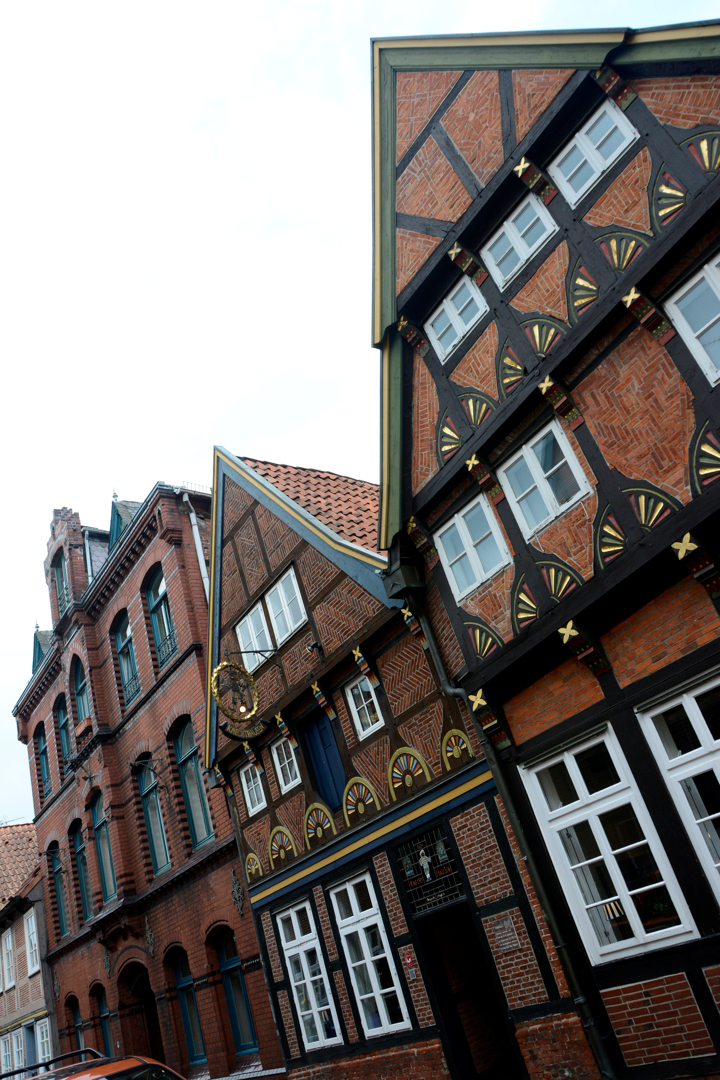
We have stayed at a rural hotel just outside Cloppenburg for three nights. It has been a quiet interlude with meandering drives through farmlamd. Two highligts have been the outdoor museum in Cloppenburg that started saving buildings in the 1930s and the cathedral in Bremen that has stunning painted features. Tomorrow we head to a little island off the coast of Netherlands where I look forward to long beach walks.




Saturday, 27 June 2015
Prague Thoughts
We left Prague this morning on a train to Hamburg which has given me time to think about what we saw over the last few days. I am sure that it will take years, literally, to process all of the art and history that is housed in that city. It has been a treat to visit!
First of all, the medieval buildings are a joy for those of us from North America who are mostly used to the flatness and newness that is architecture in the new world. I love the fairy tale feel of Prague, the sense that a jester or a knight might lurk around the next corner. I know that in reality that what is around the corner will likely be a mime or a busker but still… such scope for imagination. And speaking of buskers, the quality of street music on offer is so high. In particular two groups caught my attention: a group of young people using classical instruments to play electrified and electrifying music, and three men playing medieval music/middle eastern music on an unusual set of bagpipes, a two handled guitar and a set of drums. I managed to get a CD of the first group but didn’t get one for the second. Stan caught a few minutes of their music for me on video and I will be trying to identify it when I get home.


The river played an integral roll in our visit. A river gives a city a certain life and form. I love the bridges over it, the symbolism of it, the way it breaks the landscape and the area, gives a place for people to meet and to sense the movement of nature. In Prague there are many bridges but of course it is the Charles Bridge that is so important to the life of the city, at least to the life of tourism there. We returned to the river over and over to catch it in different lights, and with the lights on! We took a cruise along the water of course. My favourite view was the one from the restaurant beneath the Kafka Museum where the food was delicious and the view succulent. Some of my favourite photos, of the hundreds we took, were Stan’s pinholes that capture that sense of history coming up through the very cobblestones and the moistness of the air while we were there. My it can rain!


The castle hanging over the city gives such a sense of grandeur and gravitas. For much of the day, its position in the west means that it is silhouetted against the sky like a piece of finely wrought scherenshnitte. And St Vitus’s cathedral is a fine addition to that silhouette. The inside is magnificent as only a cathedral of that size can be. And the colour of the windows is beyond compare. In particular the windows at the rear of the church that were designed and built in the 20s and 30s use colour and movement in spectacular ways.


Prague pulls at your heart in the Jewish district, with sites that both uplift it and break it completely. The Spanish Synagogue has always been one of the places on my bucket list. Photos can not do it justice tho’ we certainly tried to capture every bit of the design, the colour and the decoration in our photos. I will study those images for years to come as they are a masterclass in mixing colour, texture and line in ways that are at once diverse and cohesive. This was the uplifting part. Mere blocks away was the Pinkas Synagogue. Simple white walls covered in row upon row upon row of black Neulandish lettering, broken from time to time by a red letter to mark the beginning of another family list. To see the names of the Jews lost during the Nazi years laid out so elegantly, in such volume, on the simple white walls, a soft wash of light from the leaded windows illuminating them, breaks your heart. Outside, walking through the Jewish Cemetery, somehow the heart finds rest again, strolling through the stones marking the death of lives lived as well as possible, crowded together, giving comfort to each other.


By happy accident our river cruise left from a dock across the street from the St. Agnes of Bohemia convent. Therein is housed the most amazing collection of religious art, mostly from the period around the 14th C. Hundreds of pieces from altars and churches throughout the Czech republic, with an emphasis on Mary in all her roles: mother, mourner and saint. From simple carved statues to icons and painted pieces it is another masterclass, this one in the beatification of the female face. I itch to use what I will learn from studying those faces, (they allowed photography!) in my drawing, painting and fibre work.


One of the biggest surprises of the week was the food. I will admit I came to Prague with very low expectations for the food. From the juicy burger we had the first day to the last spoonful of gelato last night we couldn’t have been more pleased with our food. In particular, the chef in our hotel (Hotel Rott in old town with an amazingly convenient location) was inventive and talented. I hate to use the word succulent twice in one day but it really is the only word that truly describes the food we were served there. The other two restaurants I would highly recommend are the one in the basement of the Kafka Museum with its amazing views of the Charles Bridge and the one in the Strahov monestary, below ground, in a cave.

Prague is a mecca for Art Nouveau enthusiasts. My fellow tanglers will be aware of Mucha, one of the foremost Art Nouveau artists, because of a tangle called Mooka. Prague was his town and there is a small museum of his posters and sketches there. I spent a pleasant hour there studying his drawings – his posters are so familiar but his detailed drawings of plants were the real treasure in the museum. Unfortunately his other works are not available for viewing as the National Museum is closed for renovations.


We walked miles and miles over our three and a half days in Prague. We had wind and rain and cold and, thankfully, a day of sun and blue skies. We saw so much and yet there is so much more to see. I’d go back and I think next time I’d use it as a jumping off place to head to Budapest and Bucharest and Croatia. But for now, my train seat faces Hamburg and I am keen to see what lies ahead as we pick up our car tomorrow and head to Stadt and Bremen and beyond. The Bremen Town Musicians await!
Wednesday, 24 June 2015




Prague Day One
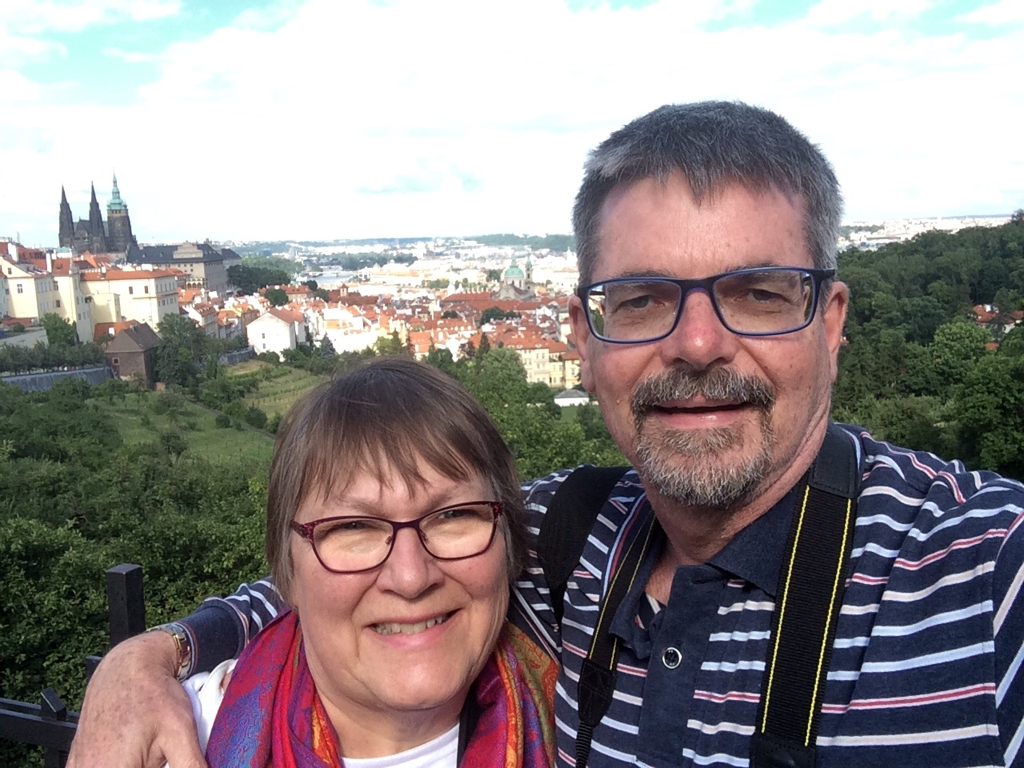
Taking a brief afternoon break before heading out to capture the late afternoon light on Charles Bridge. Sun is out for now. Only downside to Prague has been very cold, very wet weather. Of course the upside was needing a new pashmina.

Highlight of yesterday was Spanish Synagogue, a true masterclass in pattern and colour. Just a few images to make you drool. I'll be teaching with the hundreds of images we took for years to come.


 And Stan is enjoying the beer!

Highlight of yesterday was Spanish Synagogue, a true masterclass in pattern and colour. Just a few images to make you drool. I'll be teaching with the hundreds of images we took for years to come.


Saturday, 20 June 2015
And we are off ... again!
 |
| One of Stan's pinhole photos. |
Friday, 29 August 2014
Copenhagen
We walked all over Copenhagen while we waited for check in time. Nice city to walk in. Lots of great colours used on buildings. Raining now so not sure about Tivoli tonight.
Friday, 7 March 2014
Day Eight - Genovesa
Day Eight
Our last full day at sea and our first day of rain. We awake to a light drizzle and choppier seas. It is early, just 6:15, when the wakeup call sounds and we are just pulling into Genovesa. We know that we are lucky to have an opportunity to land on this island because this is one of the few ships that currently gets permission to land here and they are only allowed to come here once every two or three weeks.
Genovesa is a caldera which means that we are inside a submerged volcano. The terrain is quite rocky and steep rising up from a few white beaches. This island is the home to an overwhelming number of seabirds and there are two opportunities to land but strictly limited numbers of people allowed ashore at any one time.
We take the first photography expedition into Darwin Bay and have already sited frigate birds with their fully inflated neck pouches before we land. The males inflate these pouches to attract females during the mating season and it is magically the right week to be here. We are surprised to see graffiti high on the walls and the guide explains that sailors have been coming here for many centuries as the caldera offers protection and a safe place to land. The oldest graffiti we see dates back to 1957 but he says there are places where you can see marks scratched into the rocks that go back to the late 1700s.
Our first steps on shore bring us face to face with the red footed boobies who not only have fanciful feet but also have turquoise and blue beaks. They hang about on scrub trees and settle into mangrove bushes all around us. Their webbed feet have claws that can grip and it is fascinating to be able to be close enough to see the mechanics of this. Their chicks are already fairly large and roost in the trees with them, their fluffy feathers fanning in the breeze. The guide also points out that although the majority of the red foots have darker feathering that there is about 5 percent of them that have an alternative colouring and, quite conveniently, he points out one of these rarer specimens in the mangroves in front of us.


The next section of pathway leads us into Nasca boobie territory (which until recently were called masked boobies) which truly are the plainest of the boobies. We don't spend much time with them as there was an opportunity to see them nesting on another island and also because we hear strange and unworldly warblings from around the corner and head off to see what is going on.
The sounds are coming from a dozen or more male frigate birds who have their red throat sack fully inflated and are shimmying their wings (remember they have about a seven foot wing span!) and trying to attract a single female who is sailing high above us. With bright red throats and iridescent green feathers around their ruff they make quite a photo. She makes many passes getting lower and lower each time. Finally she chooses one of the males and lands beside him. The warbling and shimmying continues because she still may decide that he is not the one but it seems she has chosen wisely.


There is also a pair of gold crested night herons nesting on the beach. We see both the male and female independently but their nest is high on the rocks and climbing is strictly forbidden.
 We head back to the ship happy with our mornings 'catch' and Stan heads off for the last snorkeling opportunity.
A little bit more to come... we head homeward tomorrow.

Our last full day at sea and our first day of rain. We awake to a light drizzle and choppier seas. It is early, just 6:15, when the wakeup call sounds and we are just pulling into Genovesa. We know that we are lucky to have an opportunity to land on this island because this is one of the few ships that currently gets permission to land here and they are only allowed to come here once every two or three weeks.
Genovesa is a caldera which means that we are inside a submerged volcano. The terrain is quite rocky and steep rising up from a few white beaches. This island is the home to an overwhelming number of seabirds and there are two opportunities to land but strictly limited numbers of people allowed ashore at any one time.
We take the first photography expedition into Darwin Bay and have already sited frigate birds with their fully inflated neck pouches before we land. The males inflate these pouches to attract females during the mating season and it is magically the right week to be here. We are surprised to see graffiti high on the walls and the guide explains that sailors have been coming here for many centuries as the caldera offers protection and a safe place to land. The oldest graffiti we see dates back to 1957 but he says there are places where you can see marks scratched into the rocks that go back to the late 1700s.
Our first steps on shore bring us face to face with the red footed boobies who not only have fanciful feet but also have turquoise and blue beaks. They hang about on scrub trees and settle into mangrove bushes all around us. Their webbed feet have claws that can grip and it is fascinating to be able to be close enough to see the mechanics of this. Their chicks are already fairly large and roost in the trees with them, their fluffy feathers fanning in the breeze. The guide also points out that although the majority of the red foots have darker feathering that there is about 5 percent of them that have an alternative colouring and, quite conveniently, he points out one of these rarer specimens in the mangroves in front of us.
The next section of pathway leads us into Nasca boobie territory (which until recently were called masked boobies) which truly are the plainest of the boobies. We don't spend much time with them as there was an opportunity to see them nesting on another island and also because we hear strange and unworldly warblings from around the corner and head off to see what is going on.
The sounds are coming from a dozen or more male frigate birds who have their red throat sack fully inflated and are shimmying their wings (remember they have about a seven foot wing span!) and trying to attract a single female who is sailing high above us. With bright red throats and iridescent green feathers around their ruff they make quite a photo. She makes many passes getting lower and lower each time. Finally she chooses one of the males and lands beside him. The warbling and shimmying continues because she still may decide that he is not the one but it seems she has chosen wisely.
There is also a pair of gold crested night herons nesting on the beach. We see both the male and female independently but their nest is high on the rocks and climbing is strictly forbidden.
We head back to the ship happy with our mornings 'catch' and Stan heads off for the last snorkeling opportunity.A little bit more to come... we head homeward tomorrow.
Day Seven
Bartolome is the first islet on offer this morning with a wakeup call at 5:30 for those eager for the climb. Stan heads off and returns with sneakers caked and stained with red mud even though he has had a thorough rinsing as he reboards the ship. Among the many highlights of the morning were the land iguanas which look quite plump and haughty in the photographs. This islet is usually under extreme drought conditions but has had rain this season so there are patches of green and of course, swaths of mud. To protect the environment there is a set of steps constructed by the park which is very unusual for the area - there are 376 steps and the climb is 120 metres which may not seem like much but in the heat and humidity is quite grueling. It certainly puts Stan in full relaxation mode for the rest of the day.
I opt for snorkeling off Sombrero Chino which is a small islet formed by volcanic activity and which is as the name suggests, shaped like a Chinese hat. I am teamed up with Peggy and Al and we are on the hunt for Galapagos penguins which have fewer feathers than their Antarctic cousins and therefore stay in more temperate waters. This snorkeling trip leaves from a sandy beach where the red sand is already hot at 9:15! We see a wide variety of sea stars. My favourite is a trio of gunmetal grey and orange ones that seem to really pop off the white sand below. We swim around jagged rocks and through tightish passages hoping for penguins but are dissappointed.
Meanwhile Stan is cruising the same general area in a glass bottom boat and, of course, he sees and captures great shots of them on shore!
Lunch and a nap later and we set off again to deep water snorkel on another section of the coastline of this islet. Right off the bat I see a white tipped reef shark and a dark coloured ray. There are schools of neon and grey surgeon fish and more sea stars. A huge school of little silver fish pass through us in a hurry and right behind them comes the penguin. He goes right between Peggy's legs! They move so fast that it is hard to believe. We have to surface to laugh and adjust our masks because when you smile underwater the water gets in. As I am adjusting my mask another penguin paddles by on top of the water not a foot in front of my face. We drift in this area watching for the wave of silver fish knowing that they are trying to keep in front of the penguins. We weren't sure if we saw one penguin multiple times or if there was a group until we finally saw three together. Stan had opted for a Zodiac ride so Al was manning our underwater camera. He got a great video which we will bore all of you with when we get home. Oh, and we saw a total of 5 sharks on this round most of which were about five feet long but one was much larger, the guide said maybe sixteen feet long and pretty scary looking.
Swimming with penguins - best travel day ever!


Bartolome is the first islet on offer this morning with a wakeup call at 5:30 for those eager for the climb. Stan heads off and returns with sneakers caked and stained with red mud even though he has had a thorough rinsing as he reboards the ship. Among the many highlights of the morning were the land iguanas which look quite plump and haughty in the photographs. This islet is usually under extreme drought conditions but has had rain this season so there are patches of green and of course, swaths of mud. To protect the environment there is a set of steps constructed by the park which is very unusual for the area - there are 376 steps and the climb is 120 metres which may not seem like much but in the heat and humidity is quite grueling. It certainly puts Stan in full relaxation mode for the rest of the day.
I opt for snorkeling off Sombrero Chino which is a small islet formed by volcanic activity and which is as the name suggests, shaped like a Chinese hat. I am teamed up with Peggy and Al and we are on the hunt for Galapagos penguins which have fewer feathers than their Antarctic cousins and therefore stay in more temperate waters. This snorkeling trip leaves from a sandy beach where the red sand is already hot at 9:15! We see a wide variety of sea stars. My favourite is a trio of gunmetal grey and orange ones that seem to really pop off the white sand below. We swim around jagged rocks and through tightish passages hoping for penguins but are dissappointed.
Meanwhile Stan is cruising the same general area in a glass bottom boat and, of course, he sees and captures great shots of them on shore!
Lunch and a nap later and we set off again to deep water snorkel on another section of the coastline of this islet. Right off the bat I see a white tipped reef shark and a dark coloured ray. There are schools of neon and grey surgeon fish and more sea stars. A huge school of little silver fish pass through us in a hurry and right behind them comes the penguin. He goes right between Peggy's legs! They move so fast that it is hard to believe. We have to surface to laugh and adjust our masks because when you smile underwater the water gets in. As I am adjusting my mask another penguin paddles by on top of the water not a foot in front of my face. We drift in this area watching for the wave of silver fish knowing that they are trying to keep in front of the penguins. We weren't sure if we saw one penguin multiple times or if there was a group until we finally saw three together. Stan had opted for a Zodiac ride so Al was manning our underwater camera. He got a great video which we will bore all of you with when we get home. Oh, and we saw a total of 5 sharks on this round most of which were about five feet long but one was much larger, the guide said maybe sixteen feet long and pretty scary looking.
Swimming with penguins - best travel day ever!
Thursday, 6 March 2014
Day Six
On every trip there is one day where you just can't keep up and this was my day to fall back and let my body recuperate from the heat and humidity of 'tortoise' day. Stan however forges ahead!
We have repositioned to the northern side of Santa Cruz overnight and are anchored off of Cerro Dragon or Dragon Hill which is the home of many land iguanas. This population was almost wiped out by feral dogs in the sixties but has been rejuvenated by controlling the dog population (don't ask) and by the breeding programme at the research centre. By the way, these iguanas are only colourful during the breeding season so if you ever decide to come this is an excellent time of year to do it! Disembarkation was again at six! Even from the ship you could see the giant pricly pear cacti and incense trees. The cacti have developed an adaptation which includes a 'skirt' of needles that face downward which keeps the iguana from eating them around the trunk. Apparently it was a difficult climb and got quite muddy near the top as it is the rainy season. Everyone returned to the boat with shoes caked in a bright red mud. Although they are quite rigourous about washing our shoes when we return so that soil is not transferred from island to island they weren't able to get their shoes clean. Stan's runners remind me of his feet after a rainstorm in PEI.
Then they are off to snorkel around the Guy Fawkes Islets where Stan chose to snorkel with Peggy and Al off of the small beach since he didn't have me to partner with in deeper water. They saw differnt fish and invertebrates because they were in a different type of water environment.
Zodiac rides around the islets were on offer after lunch and then we set sail for Daphne Major where the Grants did all of their ground breaking reaseach into finches (read Beak of the Finch if you are interested in all the science but warning, I've found it hard slugging for a right-brained person). The captain has arranged to have us all in the bow for the sail around of this island which is strictly prohibited for tourists. It is a lovely time of day with the sun setting on the horizon and champagne on the house.
Another early night because, you guessed it, an early call tomorrow!


On every trip there is one day where you just can't keep up and this was my day to fall back and let my body recuperate from the heat and humidity of 'tortoise' day. Stan however forges ahead!
We have repositioned to the northern side of Santa Cruz overnight and are anchored off of Cerro Dragon or Dragon Hill which is the home of many land iguanas. This population was almost wiped out by feral dogs in the sixties but has been rejuvenated by controlling the dog population (don't ask) and by the breeding programme at the research centre. By the way, these iguanas are only colourful during the breeding season so if you ever decide to come this is an excellent time of year to do it! Disembarkation was again at six! Even from the ship you could see the giant pricly pear cacti and incense trees. The cacti have developed an adaptation which includes a 'skirt' of needles that face downward which keeps the iguana from eating them around the trunk. Apparently it was a difficult climb and got quite muddy near the top as it is the rainy season. Everyone returned to the boat with shoes caked in a bright red mud. Although they are quite rigourous about washing our shoes when we return so that soil is not transferred from island to island they weren't able to get their shoes clean. Stan's runners remind me of his feet after a rainstorm in PEI.
Then they are off to snorkel around the Guy Fawkes Islets where Stan chose to snorkel with Peggy and Al off of the small beach since he didn't have me to partner with in deeper water. They saw differnt fish and invertebrates because they were in a different type of water environment.
Zodiac rides around the islets were on offer after lunch and then we set sail for Daphne Major where the Grants did all of their ground breaking reaseach into finches (read Beak of the Finch if you are interested in all the science but warning, I've found it hard slugging for a right-brained person). The captain has arranged to have us all in the bow for the sail around of this island which is strictly prohibited for tourists. It is a lovely time of day with the sun setting on the horizon and champagne on the house.
Another early night because, you guessed it, an early call tomorrow!
Day Five
We have returned to civilization. When I am up in the night I see the lights of a small town out the porthole. This is Santa Cruz Island which is the second larges of the islands and the town of Puerto Ayora is home to the Charles Darwin Research Centre. It is already extremely hot and humid when we get off the Zodiacs at 7:30. The walk from the dock to the centre seems much longer to me than it should and this pattern continues for the rest of the day.
At the research centre they worked diligently through the 60's and 70's to rejuvenate the failing turtle populations on the various islands. The program was hugely successful and now most of the islands have wild populations that are self sustaining. This was the centre where poor Lonesome George lived out his life as the last remaining Pinta Island tortoise which was the only species they did not manage to save. He passed away last year and is currently on exhibit in New York but will be returning to the centre at the end of the year for exhibit. There were pens with everything from the smallest babies to juveniles that are almost ready for placement in the wild. They are not usually repatriated to their islands until they are 15 - remember these tortoise are slow growing and can live close to 200 years so they are on a different time clock than we are. The process for securing and nurturing the eggs is very rigourous. The eggs that are nearer the bottom of the nest are at a different temperature and as temperature determines sex with toroise eggs this preserves the higher ratio of female to male. Although it only about 1 degree celcius that separates the sexes they must carefully calibrate the incubator temperatures. They also discovered that the eggs must stay in the same polarity as they are laid - if they rotate at all then they will not hatch - so each egg must be carefully marked to show which way it must lay in the incubator. Research also led to finding that the urine of the female laying the egg is an insecticide and the mucus that covers the eggs an antimicrobial and antiparasitical. Although the babies are outside early in their lives their pens must be well secured and covered at night even in the research centre. Black rats that arrive with the ships have become a nuisance and the babies have soft shells until they are at least 2 years old making them quite vulnerable.
Nearby pens contained some adult turtles and they were huge. We got to see in close proximity the main difference between the species which is the shape of the carapace. On island where vegetation is low the hood around the head is also low. On islands where the vegetation is up higher the shape of the carapace has adapted to allow the head to reach up quite high for low hanging leaves and branches.
We have a long hot walk into town where we do a little shopping (very little!) and Stan gets some photos at the local fish market. We head to the meet up point at The Rock where I have the best lemonade I have every had in my life and I certainly needed it at this point. It was tangy and sharp and sweet all at the same time and oh so very cold and wonderful.
Truly the day could have ended here but it did not. In fact we were barely half done. We loaded onto busses and headed inland and uphill to the highlands where there is some agriculture. We stop at a micro sugar cane and coffee plantation (about 5 hectares in size) called El Trapiche where we get a brief glimpse of what life was like for the settlers that were sent over from Ecuador in the 1800's. The other highlight for the brave was getting to taste one of the byproducts of the molasses preparation - Galapagian moonshine! For those of you who frequent Starbucks it is worth noting that these farmers are growing the coffee amongst the local flora as it is a shade tolerant variety and Starbucks has contracted to buy most of it. Apparently it is rated as one of the top ten coffees available through them and is ecofriendly.
Lunch is a lovely stop at a restaurant out in the country called Aquelarre that has been in the hands of the same family for many generations. I was so hot and tired that lunch was a bit of a chore but Stan enjoyed his and most of mine. The local Ecuador chickens are very tasty!
At last we reach the main purpose of the day for many of the people on our ship - seeing the land tortoise in the wild. A short drive takes us to the area that is preserved for them and managed hand in hand with the local rancher who has wisely scaled back his cattle and upscaled a lovely shady veranda area where cool drink and fruit are available for the weary. Stan takes off on an adventurous hike through the preserved area; I visit for a time with a juvenile who is about 15 years old and who is graciously grazing near the veranda. I do see the larger tortoise roaming about and am surprised to see how quickly they move across the grassy areas looking for their favourites.
It has been a very long day and I am grateful to be off the Zodiac and into a cool shower. Stan attends the afternoon lecture by the head of the research station who has come on board to speak to us while I listen from the speaker in our room. Linblad is one of the main contributors to the research station and they only send speakers to their ship. We also have Ecuadorian singers and dancers on board for our entertainment but I am afraid they find a very sleepy ship and many dozing spectators.


We have returned to civilization. When I am up in the night I see the lights of a small town out the porthole. This is Santa Cruz Island which is the second larges of the islands and the town of Puerto Ayora is home to the Charles Darwin Research Centre. It is already extremely hot and humid when we get off the Zodiacs at 7:30. The walk from the dock to the centre seems much longer to me than it should and this pattern continues for the rest of the day.
At the research centre they worked diligently through the 60's and 70's to rejuvenate the failing turtle populations on the various islands. The program was hugely successful and now most of the islands have wild populations that are self sustaining. This was the centre where poor Lonesome George lived out his life as the last remaining Pinta Island tortoise which was the only species they did not manage to save. He passed away last year and is currently on exhibit in New York but will be returning to the centre at the end of the year for exhibit. There were pens with everything from the smallest babies to juveniles that are almost ready for placement in the wild. They are not usually repatriated to their islands until they are 15 - remember these tortoise are slow growing and can live close to 200 years so they are on a different time clock than we are. The process for securing and nurturing the eggs is very rigourous. The eggs that are nearer the bottom of the nest are at a different temperature and as temperature determines sex with toroise eggs this preserves the higher ratio of female to male. Although it only about 1 degree celcius that separates the sexes they must carefully calibrate the incubator temperatures. They also discovered that the eggs must stay in the same polarity as they are laid - if they rotate at all then they will not hatch - so each egg must be carefully marked to show which way it must lay in the incubator. Research also led to finding that the urine of the female laying the egg is an insecticide and the mucus that covers the eggs an antimicrobial and antiparasitical. Although the babies are outside early in their lives their pens must be well secured and covered at night even in the research centre. Black rats that arrive with the ships have become a nuisance and the babies have soft shells until they are at least 2 years old making them quite vulnerable.
Nearby pens contained some adult turtles and they were huge. We got to see in close proximity the main difference between the species which is the shape of the carapace. On island where vegetation is low the hood around the head is also low. On islands where the vegetation is up higher the shape of the carapace has adapted to allow the head to reach up quite high for low hanging leaves and branches.
We have a long hot walk into town where we do a little shopping (very little!) and Stan gets some photos at the local fish market. We head to the meet up point at The Rock where I have the best lemonade I have every had in my life and I certainly needed it at this point. It was tangy and sharp and sweet all at the same time and oh so very cold and wonderful.
Truly the day could have ended here but it did not. In fact we were barely half done. We loaded onto busses and headed inland and uphill to the highlands where there is some agriculture. We stop at a micro sugar cane and coffee plantation (about 5 hectares in size) called El Trapiche where we get a brief glimpse of what life was like for the settlers that were sent over from Ecuador in the 1800's. The other highlight for the brave was getting to taste one of the byproducts of the molasses preparation - Galapagian moonshine! For those of you who frequent Starbucks it is worth noting that these farmers are growing the coffee amongst the local flora as it is a shade tolerant variety and Starbucks has contracted to buy most of it. Apparently it is rated as one of the top ten coffees available through them and is ecofriendly.
Lunch is a lovely stop at a restaurant out in the country called Aquelarre that has been in the hands of the same family for many generations. I was so hot and tired that lunch was a bit of a chore but Stan enjoyed his and most of mine. The local Ecuador chickens are very tasty!
At last we reach the main purpose of the day for many of the people on our ship - seeing the land tortoise in the wild. A short drive takes us to the area that is preserved for them and managed hand in hand with the local rancher who has wisely scaled back his cattle and upscaled a lovely shady veranda area where cool drink and fruit are available for the weary. Stan takes off on an adventurous hike through the preserved area; I visit for a time with a juvenile who is about 15 years old and who is graciously grazing near the veranda. I do see the larger tortoise roaming about and am surprised to see how quickly they move across the grassy areas looking for their favourites.
It has been a very long day and I am grateful to be off the Zodiac and into a cool shower. Stan attends the afternoon lecture by the head of the research station who has come on board to speak to us while I listen from the speaker in our room. Linblad is one of the main contributors to the research station and they only send speakers to their ship. We also have Ecuadorian singers and dancers on board for our entertainment but I am afraid they find a very sleepy ship and many dozing spectators.
Day Four
The wakeup call comes early - 5:30 a.m.! We are anchored off of Floreana at a landing site called Punta Cormorant and the morning hike starts at 6:00 a.m. so the heat will be less intense and the photographers will have ideal light conditions. Stan has been up for a while anyway photographing the night sky at the edge of dawn.
Floreana offers more vegetation and because it is the rainy season there are blossoms and even flowers so we see Galapagos bees as well as lots of birds that are nesting. There is a brackish lake where we see two flamingos in the distance. The Galapagos Flamingo is in decline and the guides are happy that we at least saw two.
We return to the ship for breakfast and kit up for snorkeling around Champion Islet just off the edge of Floreana. There are some currents here so there are different kinds of fish to be seen and the schools are bigger than we saw the first day. The big surprise of the day was having a white tipped reef shark swim underneath us. Stan got really lucky and caught him on video because he swam through when a large school of colourful fish were around us.
The daily schedule is organized to keep us out of the strong sun so we have some time back on board for photo seminars and break out sessions as well as time to have a siesta in one of the hammocks hung in shady parts of the deck, or on lounges or on beds in our well air-conditioned rooms.
Late in the afternoon we land at Post Office Bay to visit the Post Office Barrel. This location has been in use since the early exploration and whaling days. It was first mentioned in writing in 1793. Sailors wrote letters and dropped them here. The next ship along would go through the mail and find the letters that were addressed to go to the ports they were headed for and would take them to deliver when they arrived. We went through the cards that had been posted and found only one that we could hand deliver and it is actually headed for Indialantic where I am teaching in April. We have posted cards for the kids and the parents and we will will see how long it takes for them to reach us.
No surprise we were really early to bed. We have seen the itinerary for the next day and know it will be tiring.


The wakeup call comes early - 5:30 a.m.! We are anchored off of Floreana at a landing site called Punta Cormorant and the morning hike starts at 6:00 a.m. so the heat will be less intense and the photographers will have ideal light conditions. Stan has been up for a while anyway photographing the night sky at the edge of dawn.
Floreana offers more vegetation and because it is the rainy season there are blossoms and even flowers so we see Galapagos bees as well as lots of birds that are nesting. There is a brackish lake where we see two flamingos in the distance. The Galapagos Flamingo is in decline and the guides are happy that we at least saw two.
We return to the ship for breakfast and kit up for snorkeling around Champion Islet just off the edge of Floreana. There are some currents here so there are different kinds of fish to be seen and the schools are bigger than we saw the first day. The big surprise of the day was having a white tipped reef shark swim underneath us. Stan got really lucky and caught him on video because he swam through when a large school of colourful fish were around us.
The daily schedule is organized to keep us out of the strong sun so we have some time back on board for photo seminars and break out sessions as well as time to have a siesta in one of the hammocks hung in shady parts of the deck, or on lounges or on beds in our well air-conditioned rooms.
Late in the afternoon we land at Post Office Bay to visit the Post Office Barrel. This location has been in use since the early exploration and whaling days. It was first mentioned in writing in 1793. Sailors wrote letters and dropped them here. The next ship along would go through the mail and find the letters that were addressed to go to the ports they were headed for and would take them to deliver when they arrived. We went through the cards that had been posted and found only one that we could hand deliver and it is actually headed for Indialantic where I am teaching in April. We have posted cards for the kids and the parents and we will will see how long it takes for them to reach us.
No surprise we were really early to bed. We have seen the itinerary for the next day and know it will be tiring.
Subscribe to:
Posts (Atom)